
The Difference Between a Recipe and Cooking Skill
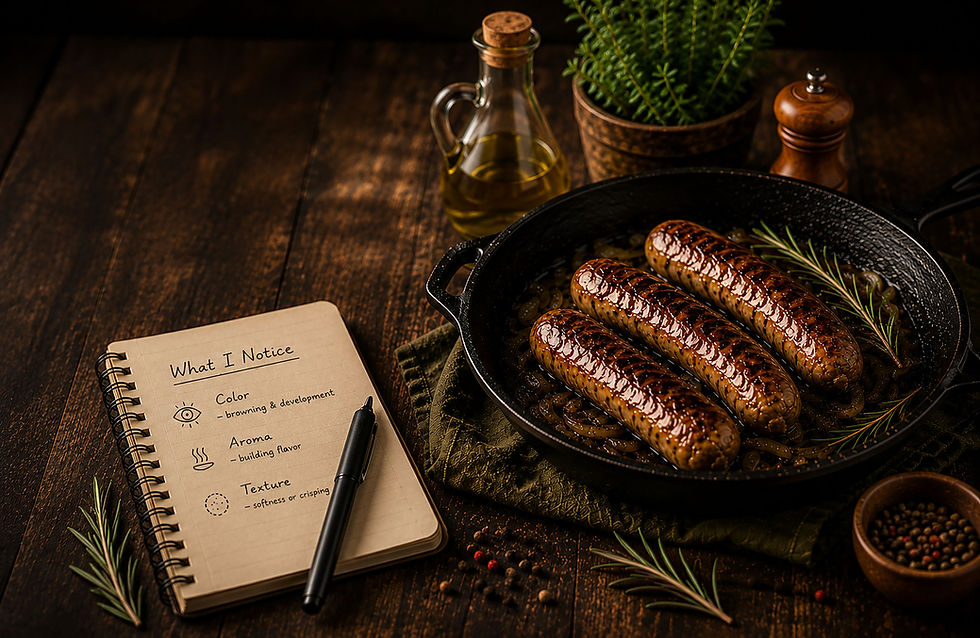
A recipe is one of the most useful tools in the kitchen. It gives structure when you are not sure where to begin. It tells you what ingredients to gather, how much to use, what order to follow, and how long each step might take. For a home cook, especially when preparing something unfamiliar, that kind of guidance matters. It removes guesswork and gives the meal a clear direction.
But a recipe is not the same thing as cooking skill.
A recipe can tell you to brown sausage for a few minutes, but it cannot fully judge what is
happening in your pan. It does not know how hot your stove runs, how heavy your skillet is, how cold the sausage was when it entered the pan, or how much moisture is coming from the ingredients around it. It can give timing, but cooking does not happen by time alone. Cooking happens through heat, moisture, texture, color, aroma, and attention.
Skill begins when you learn to notice those things.
This is why two people can follow the same recipe and still get different results. One person
may allow the sausage to brown evenly and release its fat gradually. Another may move it too often, crowd the pan, or add the next ingredient before the surface has developed enough color. The instructions may be the same, but the cooking decisions are different.
A Recipe Gives Direction
A good recipe answers basic questions. What should I cook? What do I need? What comes
first? What comes next? How long should this take? These questions are important because
they create order. Without that order, cooking can feel uncertain.
Recipes are also helpful because they make dishes repeatable. If a meal works well, the recipe gives you a way to return to it. It becomes a reference point. You can follow it again, adjust it slightly, and learn from the result.
But recipes have limits. They cannot control every detail inside a real kitchen. A recipe may say medium heat, but medium heat is not identical on every stove. A recipe may say cook until browned, but browning depends on direct contact with the pan, surface moisture, pan temperature, and time. A recipe may say add onions after the sausage, but the right moment depends on how much fat has rendered and how much color has developed.
This does not make recipes unreliable. It simply means that recipes work best when they are supported by observation.
Cooking Skill Comes From Paying Attention
Cooking skill begins when you stop treating instructions as the only source of information. The food itself gives signals while it cooks. A sausage becoming firmer tells you heat is changing its structure. Fat appearing in the pan tells you rendering has started. A steady sizzle tells you the surface is making contact with heat. Pale color tells you browning has not fully developed. Too much steam tells you moisture is collecting faster than it can escape.
These are real cooking signals, not myths or tricks. They are part of how food responds to heat.
Color can tell you when browning is happening. Aroma can tell you when ingredients are
developing. Sound can tell you whether the pan is active or wet. Texture can tell you whether food is softening, tightening, crisping, or drying. Moisture can tell you whether the food is browning or steaming.
A recipe may say to cook sausage for a certain number of minutes. Skill asks what the sausage looks and sounds like right now. If the casing is still pale, it may need more contact with the pan. If the outside is darkening too quickly, the heat may need to come down. If liquid is collecting in the pan, the food may be steaming instead of browning.
That kind of attention is what turns recipe following into real cooking.
Time Helps, But It Is Not Everything
Cooking times are useful because they give a starting point. They help you plan the meal and understand what to expect. But time should not be treated as the only measure of doneness or quality.
The same sausage can cook differently depending on the situation. A sausage straight from the refrigerator may take longer to warm through than one that has rested briefly before cooking. A thick sausage behaves differently from thin slices. A crowded pan loses heat faster and traps more moisture. A heavy skillet holds heat differently from a thin pan.
These differences matter. They can change texture, browning, and moisture even when the
recipe stays the same.
A good cook uses time as one piece of information. The clock may tell you when to check the food, but your senses help you decide what to do next. This is especially important with simple meals because there are fewer ingredients to hide mistakes. When the food is simple, heat, timing, and texture become more noticeable.
Reading the Pan
The pan gives useful information from the moment food touches it. When sausage enters a hot pan, the sound can tell you whether the heat is strong enough. A steady sizzle usually means the surface is making contact and moisture is beginning to move. A weak sound may mean the pan is not hot enough. Loud sputtering may mean excess moisture or heat that is too aggressive.
As sausage cooks, the surface changes. The casing tightens. Fat begins to render. Browning
starts where the sausage touches the pan. If the sausage stays in one position long enough,
that section develops color. If it is moved constantly, the surface does not get the same chance to brown.
The same idea applies to many everyday ingredients. Onions need time to soften. Garlic cooks quickly and can darken faster than other ingredients. Bread needs direct contact with heat to toast properly. Vegetables release moisture, which can slow browning if too much enters the pan at once.
A recipe can tell you to stir, flip, turn, or add. Skill helps you understand when those actions actually make sense.
Repetition Builds Confidence
Many people think cooking skill comes from learning many recipes. In reality, a lot of skill comes from cooking familiar foods more than once. Repetition helps you notice patterns.
The first time you cook a dish, you may focus mainly on following the steps. The second time, you may notice how the pan sounds when the sausage starts to brown. The third time, you may realize that turning it less often creates better color. Over time, you begin to understand what normal cooking behavior looks like.
This is why everyday cooking can be such a good teacher. Simple meals give you repeated
chances to observe food under heat. You learn how fat renders, how moisture affects texture, how vegetables soften, how bread absorbs flavor, and how sausage changes as it browns.
Repetition does not make cooking boring. It makes cooking clearer. The more familiar you
become with a process, the easier it becomes to adjust without feeling unsure.
Skill Helps You Adapt
Home kitchens are not controlled environments. Your pan may be larger or smaller than the one used in a recipe. Your stove may run hotter or cooler. Your sausage may release more fat than expected. Your vegetables may contain more moisture. You may not have the exact ingredient listed.
Skill helps you respond to these changes.
If the pan is too dry, you may lower the heat or add a small amount of fat. If sausage is
browning too quickly before the inside has had time to cook through, you may reduce the heat and give it more time. If vegetables are releasing too much moisture, you may let the pan cook down before adding the next ingredient. If browned bits are left after cooking sausage, you may use them to build flavor into the rest of the meal.
These decisions are not about ignoring the recipe. They are about using the recipe with better judgment.
Good cooking is rarely random. It usually comes from recognizing cause and effect. When you see pale sausage, you understand it needs more browning. When the pan goes quiet, you understand the heat may have dropped. When steam collects, you understand moisture is slowing the process. When garlic begins to smell sharp, you understand it may be close to burning.
These observations come from practice, not guessing.
Texture Shows the Difference
Texture is one of the clearest places where skill matters. A recipe may say to cook until done, but done does not always mean satisfying. Sausage can be fully cooked but still lack good texture if it never browned properly. Vegetables can be soft but watery if they were added too early or cooked in a crowded pan. Bread can be warm but flat if it never toasted.
Skill helps you think about texture before the food reaches the plate.
Do you want the sausage whole and juicy, or sliced with more browned edges? Do you want onions deeply softened or still slightly firm? Do you want bread to absorb juices or add crispness? These choices affect the final bite. They shape how the meal feels, how flavor is released, and how balanced the plate becomes.
This is why cooking skill is not only about flavor. It is also about structure, moisture, and
contrast.
A Recipe Starts the Meal. Skill Finishes It.
The best way to think about a recipe is as a guide. It gives you a path, but your attention shapes the result. The recipe may tell you where to begin, but skill helps you decide when to wait, when to turn, when to lower the heat, when to add the next ingredient, and when the food is ready.
This is especially true with simple food. A sausage, a pan, a few vegetables, and bread can
become a satisfying meal when each part is handled with care. The same ingredients can feel flat if they are rushed, crowded, or cooked without attention.
Cooking skill does not make food complicated. It makes simple food better.
Learning to Trust the Process
The more you cook, the more your senses become part of the process. You begin to recognize the smell of browning sausage. You notice when the pan sounds too wet. You see when the casing has tightened. You feel when sliced pieces have enough structure to turn cleanly.
This kind of learning happens gradually. It does not require perfect meals. Every time you cook, you gather information. Maybe the pan was too crowded. Maybe the heat was too high. Maybe the sausage was moved too often. Maybe the vegetables went in too early. These are useful lessons when you notice them.
A recipe helps you repeat a dish. Skill helps you understand it.
That is the real difference. Recipes bring structure to the kitchen, but cooking skill brings
confidence. It helps you use your eyes, ears, hands, and judgment. It helps you respond to the food in front of you instead of depending only on written steps.
In everyday cooking, that matters. Because the best meals are not always the most complicated ones. Often, they come from simple ingredients handled with attention.


Comments