
Cooking by Observation Instead of Strict Timers
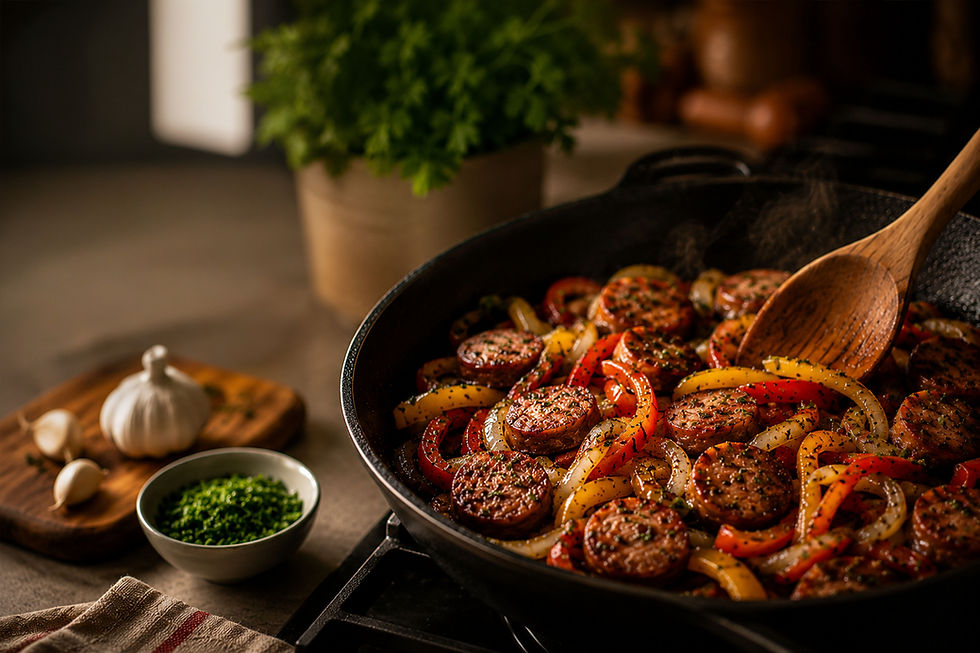
Most of us have experienced it at some point. You follow a recipe carefully, measure the ingredients, set the timer exactly as instructed, and wait for the magic to happen. Ten minutes pass, yet the onions still seem firm. The sausage has browned more quickly than expected. The potatoes aren't quite tender. Suddenly, the confidence you felt at the beginning of the recipe starts to disappear.
The immediate reaction is often to question ourselves. Did we miss a step? Did we use the wrong ingredients? Is the recipe flawed?
In reality, the answer is usually much simpler: cooking doesn't happen under identical conditions every time.
Recipes provide guidance, but they cannot account for every kitchen, every pan, every stove, or every variation in ingredients. A timer can tell you how long something took in the recipe developer's kitchen. It cannot tell you exactly what is happening in yours.
This is where observation becomes one of the most valuable skills a home cook can develop.
Cooking by observation doesn't mean ignoring recipes altogether or abandoning timers completely. Instead, it means learning to pay attention to the signals ingredients give throughout the cooking process. It means understanding that recipes offer direction, while observation allows you to adapt, respond, and ultimately cook with greater confidence.
Why Recipes Rely on Timers
There is a reason recipes include cooking times. Timers provide structure, especially for people learning new techniques or attempting unfamiliar dishes. They help organize multiple tasks and prevent us from forgetting what's on the stove or in the oven.
In certain situations, timing is critical. Baking often depends on precision. Food safety considerations require attention to temperature and duration. Long simmering dishes benefit from periodic reminders to stir or check liquid levels.
The problem isn't the timer itself. The problem begins when we assume that time alone determines doneness.
Cooking is influenced by countless factors. Two people following the same recipe can end up with very different results simply because their circumstances are different.
One cook may use a heavy cast iron skillet that retains heat efficiently, while another uses a thinner stainless steel pan that responds more quickly to temperature changes. Gas burners distribute heat differently than electric cooktops. Ingredients taken directly from the refrigerator behave differently than those that have rested at room temperature.
Even the way ingredients are prepared matters. Finely diced onions soften faster than larger pieces. Thin sausage slices brown differently than whole links. Smaller potatoes cook more quickly than larger ones.
These variables remind us that recipes are estimates, not guarantees.
Learning to Trust What You See
Visual cues are often the easiest signals for home cooks to recognize.
Consider onions. A recipe may suggest cooking them for eight to ten minutes, but onions don't watch the clock. Instead, they move through visible stages. They begin crisp and opaque, gradually becoming translucent as their structure softens. With additional time, they take on a golden color before eventually developing deeper caramelization.
The transformation itself provides information.
Sausages offer another excellent example. When placed in a pan, their exterior initially appears pale and moist. As cooking progresses, fat begins to render, moisture evaporates, and browning develops on the surface. The casing may tighten slightly while the color becomes more pronounced.
These changes tell a story about what's happening inside the ingredient. By paying attention to them, cooks can make informed decisions instead of relying exclusively on predetermined timelines.
Vegetables behave similarly. Mushrooms release water before eventually browning. Tomatoes soften and collapse as they cook. Bell peppers lose some of their firmness while maintaining enough structure to contribute texture.
The more we observe these changes, the more confident we become in recognizing when ingredients have reached the desired stage.
The Kitchen Speaks Through Aroma
Smell is perhaps one of the most underappreciated cooking tools available to home cooks.
Aromas evolve throughout the cooking process, often signaling when it's time to move on to the next step.
Garlic provides a perfect illustration. Freshly chopped garlic has a sharp, assertive aroma. Once added to warm oil, that scent quickly changes, becoming sweeter and more inviting. This fragrant stage indicates an opportunity to continue building the dish.
Leave garlic unattended for too long, however, and the aroma changes again. What was once pleasant becomes bitter and harsh.
Spices follow a similar pattern. When briefly exposed to heat, they release essential oils that intensify their fragrance. These moments are difficult to define through exact timing because the conditions vary from kitchen to kitchen.
Yet the nose notices.
Many experienced cooks instinctively recognize these aromatic transitions. They don't necessarily rely on seconds or minutes. Instead, they trust the information their senses provide.
Developing this awareness takes practice, but it doesn't require formal training. It simply requires paying attention.
Listening to the Pan
Cooking is often thought of as a visual activity, but sound also offers valuable feedback.
The sizzling sound produced when ingredients meet a hot pan can reveal a surprising amount about the cooking process.
A steady, moderate sizzle often suggests that the heat is appropriate for browning. Excessively loud crackling may indicate that temperatures are too high, increasing the risk of scorching. On the other hand, a lack of sound may suggest that the pan hasn't reached the desired temperature.
Liquids simmer differently depending on their intensity. Gentle bubbling indicates a controlled simmer, while aggressive boiling can alter textures and reduce liquids too quickly.
Although these distinctions may seem subtle, they become increasingly noticeable with experience.
Cooking is a multisensory activity. The more senses we engage, the more information becomes available to guide our decisions.
Texture as a Guide
Texture provides another important layer of understanding.
When we test a potato with the tip of a knife or fork, we're gathering information about resistance. When we press gently against a cooked vegetable, we're assessing softness. When we slice into a sausage, we're evaluating firmness and moisture.
Texture helps us move beyond the simple question of whether something is technically cooked.
Instead, it allows us to ask whether it has reached the desired result.
Some people prefer vegetables with more bite. Others enjoy softer preparations. Neither approach is inherently right or wrong.
Observation enables customization.
Rather than allowing timers to dictate every outcome, cooks can adjust techniques to align with personal preference.
What Sausages Can Teach Us About Observation
Sausages offer particularly valuable lessons in observational cooking because they undergo several noticeable changes throughout the cooking process.
As heat is introduced, fat begins to render gradually. The exterior develops color. Aromas
intensify. Texture evolves.
Cooking sausages successfully often involves responding to these developments rather than rigidly adhering to exact minutes.
Whole sausages, for instance, may benefit from moderate heat that encourages gradual cooking. Sliced sausages expose more surface area, promoting faster browning and quicker flavor development.
Observing how sausages behave in the pan encourages attentiveness.
You begin noticing the relationship between heat and browning. You recognize how moisture influences texture. You become more comfortable making adjustments.
In many ways, sausages provide an excellent opportunity to practice cooking by observation because the feedback they offer is both visible and immediate.
Building Confidence Through Experience
One of the greatest advantages of observational cooking is the confidence it fosters.
Many home cooks worry about making mistakes. They fear deviating from recipes because they assume precise adherence guarantees success.
Yet cooking rarely unfolds exactly as written.
The onions may soften more quickly than expected. The sauce may reduce faster. The vegetables may require additional time.
When observation becomes part of the process, these variations feel less intimidating.
Instead of asking, "Why isn't this matching the timer?" we begin asking, "What are the ingredients telling me right now?"
This shift in perspective transforms uncertainty into curiosity.
Every meal becomes an opportunity to learn.
Over time, repeated experiences build intuition.
Not because we memorize countless rules, but because we recognize familiar patterns.
When Timers Still Matter
Emphasizing observation does not mean dismissing timers altogether.
Timers remain useful tools.
They help coordinate complex meals. They prevent distractions from turning into forgotten dishes. They provide valuable structure during unfamiliar tasks.
The goal isn't to replace timers completely.
It's to use them appropriately.
Think of timers as reminders rather than absolute authorities.
Allow them to prompt you to check the pan, assess the ingredients, and make informed decisions based on what you observe.
When combined with sensory awareness, timers become even more effective.
Becoming a More Attentive Cook
Improving observational skills doesn't require elaborate techniques.
It begins with slowing down.
Choose one ingredient and notice how it changes. Watch onions transition from crisp to translucent. Observe mushrooms releasing moisture before browning. Pay attention to the aromas that emerge when herbs or spices meet heat.
Resist the urge to multitask excessively.
Stay present.
Ask questions.
How does this ingredient look compared to a few minutes ago? Has the aroma changed? Is the sound different? Has the texture softened?
These small moments of awareness accumulate over time.
Eventually, they shape the way we cook.
Looking Beyond the Clock
Recipes have an important place in our kitchens. They introduce us to new techniques, inspire creativity, and provide helpful frameworks for preparing meals.
But recipes are only part of the equation.
The ingredients themselves offer guidance if we're willing to notice it.
They change color. They release aromas. They produce sounds. They soften, firm up, and transform in response to heat.
Observation allows us to participate more actively in that process.
It encourages flexibility when conditions differ. It helps us adapt when recipes don't unfold exactly as expected. Most importantly, it builds confidence grounded in experience rather than strict dependence on instructions.
The next time you cook, set the timer if you need it.
But don't stop there.
Look closely at the ingredients in front of you. Listen to the sounds coming from the pan. Notice how aromas evolve. Pay attention to texture.
Because the most valuable cooking lessons often emerge not from watching the clock, but from learning to recognize what the food has been telling us all along.
Cooking, after all, is not simply about measuring time.
It's about paying attention.


Comments