
Your Ultimate Guide to Cooking Oils and How They Transform Flavor
- Rafaela
- Oct 18, 2025
- 7 min read
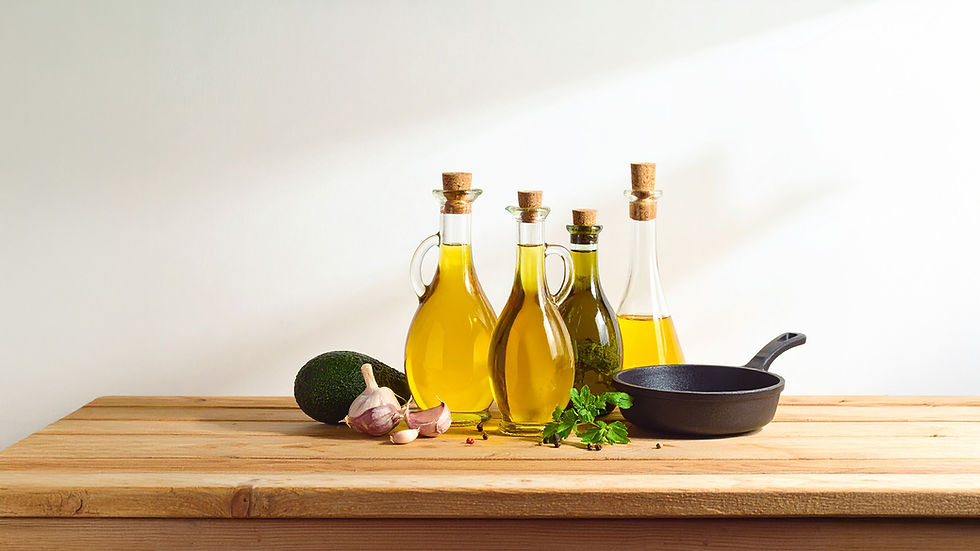
Ask any cook what they reach for first in the pantry and many will say oil. It is one of those tiny decisions that quietly steers the whole meal. The oil you choose will shape aroma, texture, and the flavor frame that surrounds every other ingredient. A neutral oil can make spices sing. An olive oil can add a soft, fruity warmth. A toasted sesame oil will announce itself in the first breath. Choosing oil is not just about smoke points and shelf life. It is about voice. Each oil speaks in its own register and knowing when to let it lead and when to keep it in the background is a practical skill any Cooks kitchen benefits from.
This piece looks at the oils worth keeping at hand, what they do to food, how to use them in pan cooking grilling and baking, and how to treat them with simple care. It is not theory for a lab. This is kitchen talk. It is about how aroma and texture change when the oil changes and how small choices create big differences at the table.
Why oil matters more than you might expect
Oil is fat plus flavor carrier. When you cook you are doing two basic things. One is building taste in the food itself through caramelization and seasoning. The other is building aroma and mouthfeel with fat. Oil melts and spreads flavor across a bite. It carries volatile compounds that reach your nose and set expectations before the first mouthful. When oil has its own strong character it will push the whole dish in that direction. When it is neutral the other ingredients get to speak first.
Think about a simple saute of garlic and greens. If you use a neutral oil the garlic will be the star and the greens will taste bright. If you use a robust olive oil you will get a soft fruitiness that wraps the garlic in warmth. If you use sesame oil the dish becomes more Asian in tone before you add soy or ginger. That effect is not subtle. It is the difference between a dish that tastes familiar and one that feels like a clear choice.
Essential oils to keep in your kitchen
Olive oil extra virgin
This is the oil most home cooks think of when they imagine flavor. High quality extra virgin olive oil brings green and fruity notes with peppery finish in some varieties. Use it for finishing salads for dipping bread and for low to medium heat cooking where the oil is part of the flavor conversation. It is not the best tool for very high heat searing because of its lower smoke point, but finishing food with it after cooking will add aroma that few other oils match.
Avocado oil
Avocado oil has a neutral but rich mouthfeel and a higher smoke point than most extra virgin olive oils. It browns nicely and stands up to pan searing and quick roasting. When you need a subtle buttery texture without strong olive flavor this is a good choice.
Neutral vegetable oil or sunflower oil
These are the workhorse oils. They let spices and aromatics lead. Use them for frying for baking and whenever you do not want the oil to change the dish. They are economical and have stable heat characteristics which makes them reliable for everyday cooking.
Canola oil
Canola behaves similarly to vegetable oil and is often used for high heat cooking. It has a neutral flavor and good shelf life. Choose a good quality cold pressed or expeller pressed version when you want better flavor and cleaner processing.
Sesame oil toasted
This is a finishing oil rather than a cooking oil. A few drops will shift a dish instantly. Add it toward the end of cooking or toss with a salad or a noodle bowl. Its aroma is bold so a little goes a long way.
Coconut oil
Coconut oil brings a specific sweet and tropical note. It is used heavily in certain cuisines. It works with curries and stir fries where its flavor complements rather than competes. Use it when you want that signature aroma.
Ghee clarified butter
Ghee is not strictly an oil but it behaves like one in cooking. It has a nutty aroma and a high smoke point which makes it excellent for pan cooking where you want butter flavor without burning. It is also shelf stable longer than butter which makes it practical.
How smoke point shapes your technique
Smoke point matters but it is not the only rule to follow. The smoke point is the temperature at which oil begins to break down and release visible smoke. When oil smokes it also starts to lose flavor and to create off notes that you do not want in your food.
For quick searing and high heat work you want oils that tolerate higher temperatures. Avocado oil ghee and refined oils are generally better for that. For low and slow cooking or for finishing, oils with strong flavor like extra virgin olive oil or toasted sesame oil are better because they will not be pushed to the edge by heat and their aroma will do the job you want.
One practical approach is to match the oil to the technique rather than vice versa. If you are grilling a sausage or searing a steak use an oil with a high smoke point. If you are finishing a salad or dressing a grilled vegetable choose a fragrant oil that adds a last layer of aroma.
What oil does to texture and mouth feel
Different oils change how a dish feels in the mouth. A lighter neutral oil gives a clean finish and lets acids and spices drive sensation. A denser oil like extra virgin olive oil or coconut oil creates a coating on the palate which can feel silky. That coating helps flavors linger which is why olive oil works so well on bread and raw vegetables. It is also why heavy oils feel heavy if you overuse them.
When you are building a dish think about whether you want the oil to be obvious or invisible. If you want bright and sharp flavors make oil a supporting cast. If you want roundness and comfort let oil play a more forward role. That choice will also determine how much oil you should use. Good oils are precious in flavor so a smaller amount often does the job.
Pairing oils with cuisines and ingredients
Pairing oil with cuisine is simple and practical. Mediterranean dishes like fresh salads roasted vegetables and grilled fish respond well to extra virgin olive oil. Southeast Asian flavors benefit from a few drops of toasted sesame oil at the end. Indian and South Asian dishes often use ghee or coconut oil. For neutral or pan Asian cooking choose neutral oils and add other aromatics to define the dish.
When pairing, think about balance. Delicate fish and light vegetables prefer subtle oils. Bold meats and spicy dishes can handle more assertive oils. Also consider how the oil interacts with acidic ingredients. Acid will open up oils and make them feel brighter. A lemon squeeze over olive oil changes how both behave on the tongue.
Practical tips for the cook
Use oil as seasoning. Think of oil as one more layer of seasoning. Drizzling a little extra virgin olive oil over a finished vegetable can make it feel complete. The same is true of a very small amount of toasted sesame oil in a finished noodle bowl.
Reserve fragrant oils for finishing. Toasted sesame oil and higher quality olive oils will lose nuance if exposed to high temperatures for long periods. Add them at the end of cooking or use them raw.
Mind the heat. Start with moderate heat and adjust. If your pan is screaming with heat you will scorch aromatics and risk drying food. Lower heat and patience give you more control.
Respect storage. Oils do not last forever. Light oxygen and heat will degrade them. Store bottles in a cool dark place and buy modest quantities of the higher quality oils so they are used fresh.
Use the right tool. A heavy pan distributes heat better. For high heat searing a cast iron pan with a neutral oil or ghee will give color and moisture control. For dressings or finishing use small jars so you can taste as you go.
A few less obvious ideas
Try blending oils. A mix of a neutral oil with a small amount of extra virgin olive oil can give you some of the best qualities of both. The neutral oil gives stability at higher heat and the olive oil hints at aroma.
Think seasonally. In summer use lighter oils and more citrus. In winter lean toward richer oils and spices that match the season. This small shift will change how comforting or refreshing the dish feels.
Match oil to cooking time. Quick tosses and sautés need different oils than long roasts. For long braises the fat in the dish will change over time so start with an oil that will remain stable and finish with flavor later.
Final note on health and flavor
There are many claims about which oil is healthiest but in a kitchen that matters less than how you use the oil. A small amount of a good oil will add flavor and encourage you to eat more vegetables and whole foods. Avoid overloading food with oil in the name of health.
Use it to enhance not to drown.
Choose unprocessed oils when you want flavor. For neutral cooking choose refined oils for stability. If you are finishing and want aroma choose less processed oils even though they are more delicate.
The last thing I will say is this. The oil in your pantry is not a single tool. Treat it as a palette. Use it to support your spices your herbs and the ingredients you are cooking. Taste and smell as you cook and learn which oils make your food sing. Over time you will see how a small change at the start of the cooking process creates a different meal at the table.


Comments